Core sentences3 min read
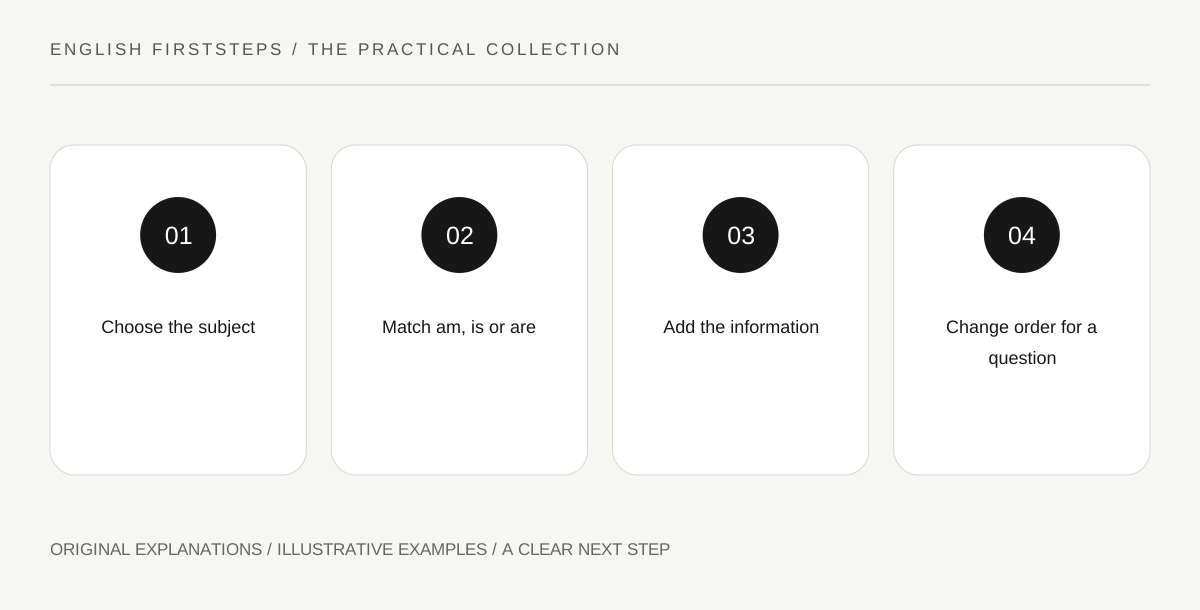
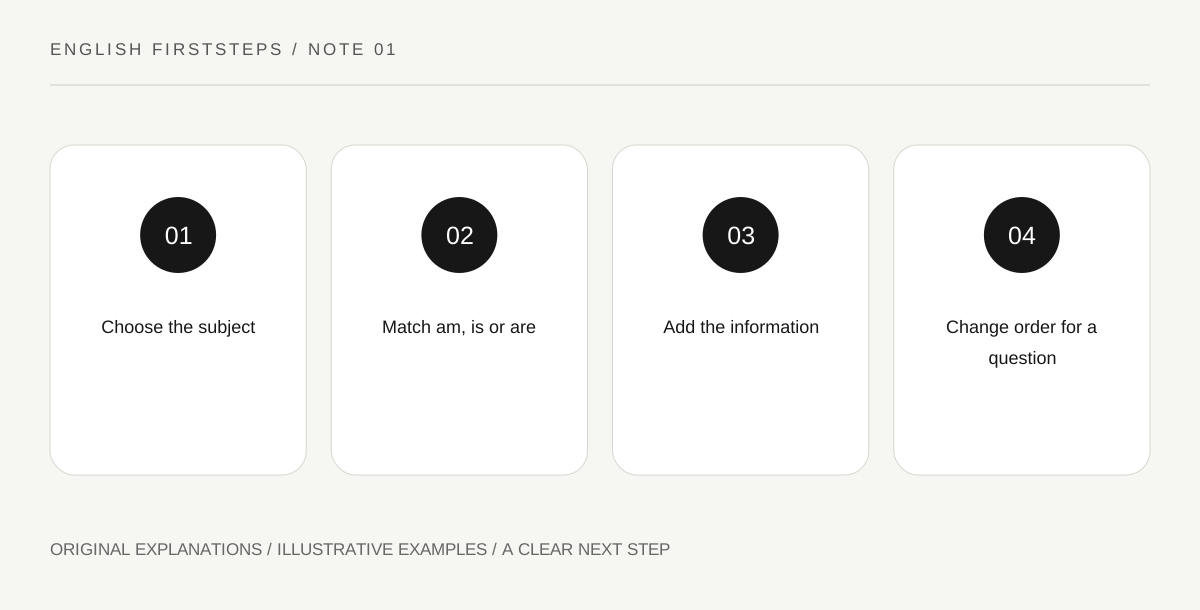
A short introduction gives you a practical reason to learn the verb be. Connect a person to a name, place, role or feeling, then form a question. Keep these sentences separate from action sentences such as I work, which use a different pattern.
Read the guide ↗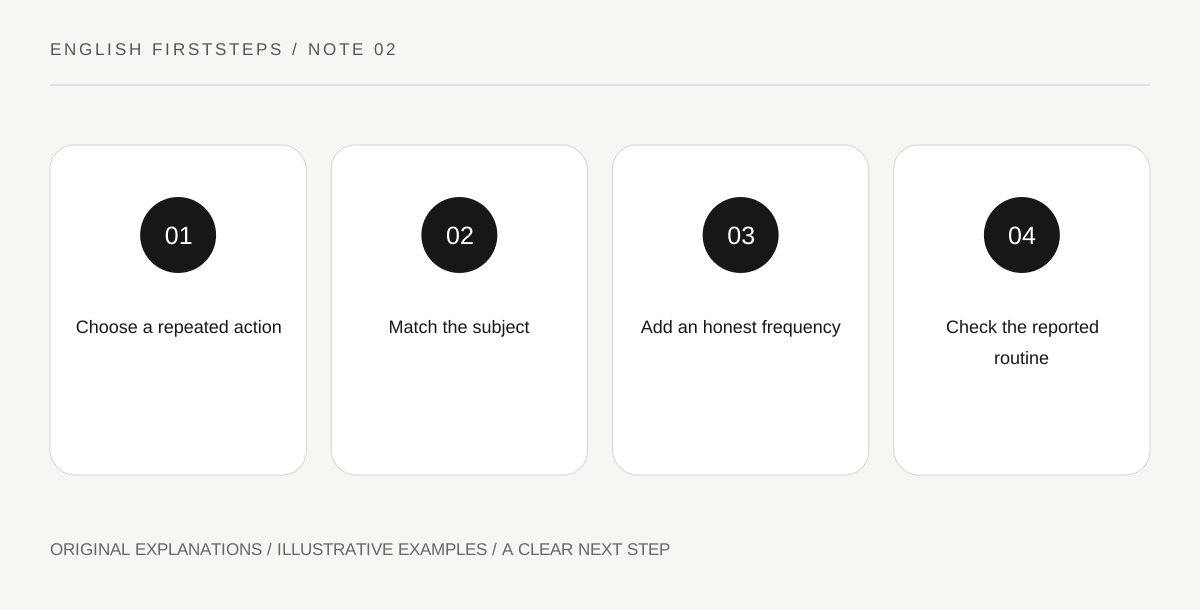
Core sentences3 min read
The present simple helps you describe repeated activities and ordinary facts. Start with a few actions that are true for you, then describe another person’s routine. Watch what happens to the verb when the subject changes, and keep habits separate from what is happening right now.
Read the guide ↗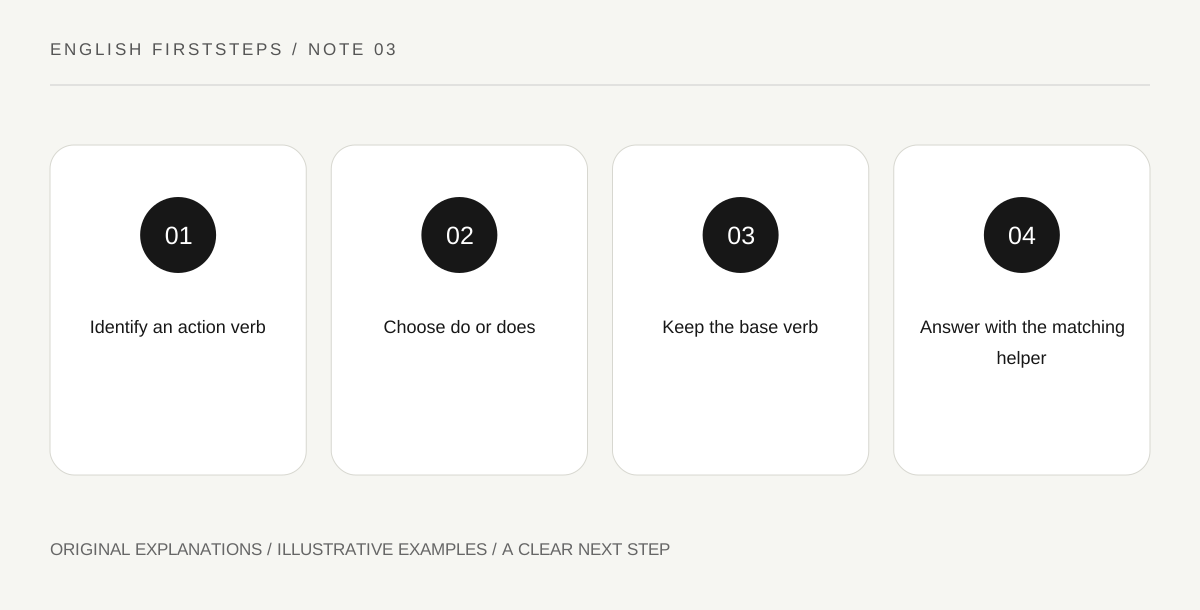
Core sentences3 min read
Questions about ordinary activities usually need do or does in the present simple. The extra word carries part of the grammar, so the main verb stays in its base form. Practise asking and answering real questions rather than turning every statement into an identical worksheet item.
Read the guide ↗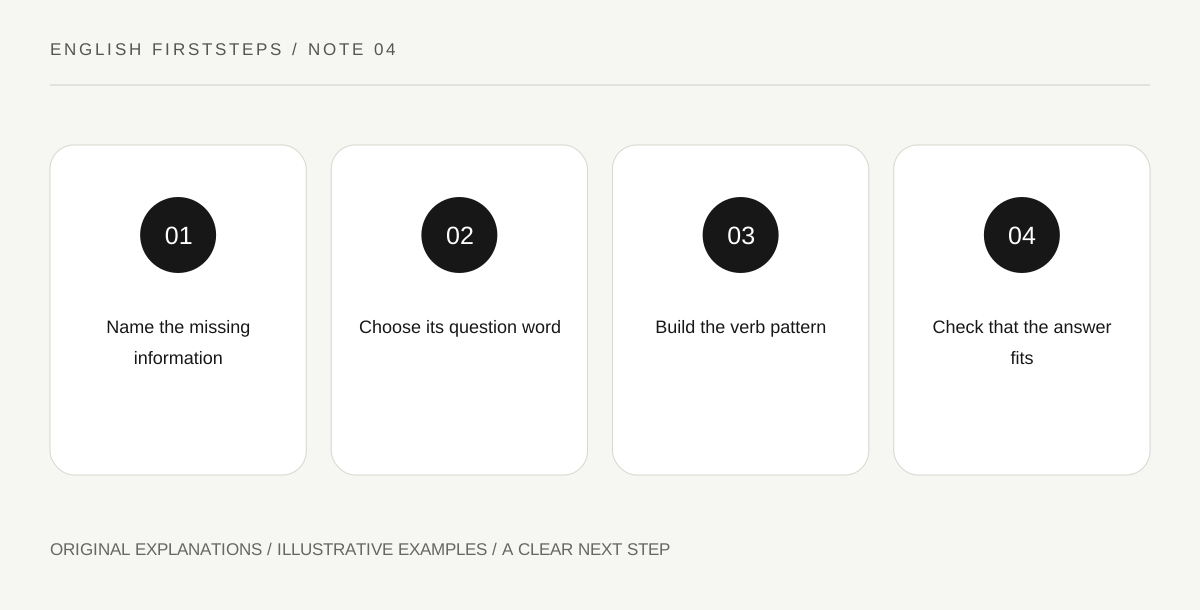
Core sentences3 min read
A question can be grammatically tidy and still ask for the wrong information. Decide whether you need a person, place, time, reason or quantity before building it. Then use the question pattern for be, an ordinary action or a modal such as can.
Read the guide ↗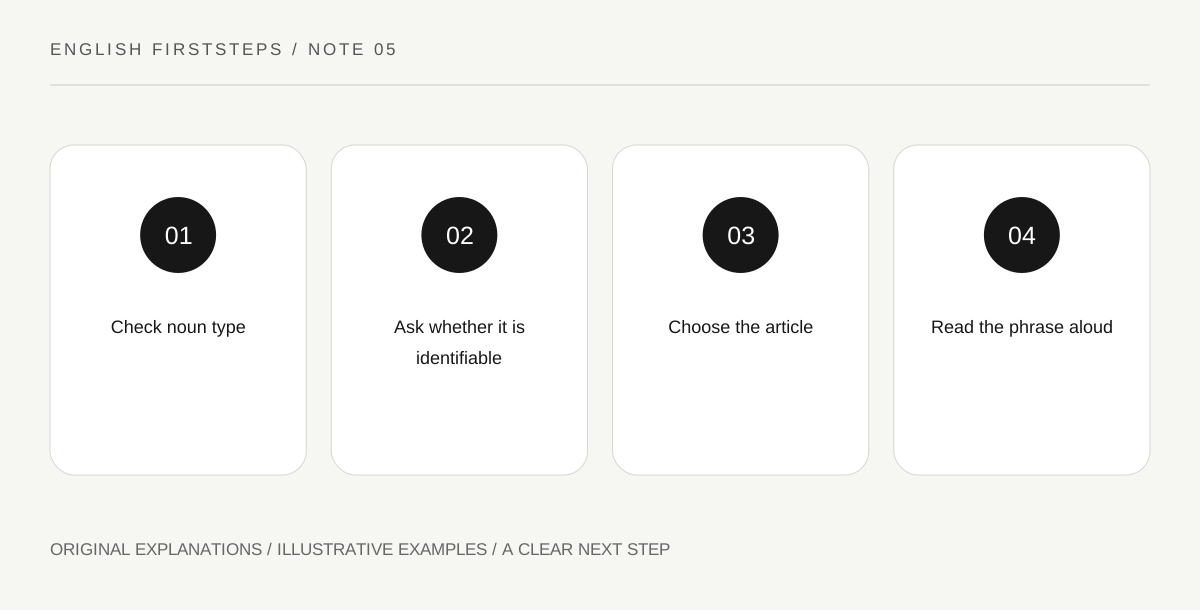
Core sentences3 min read
English articles help listeners understand whether you are introducing an item or identifying a particular one. Begin with singular countable nouns and a short story. Learn the sound-based choice between a and an, then notice how the article changes when the item becomes identifiable.
Read the guide ↗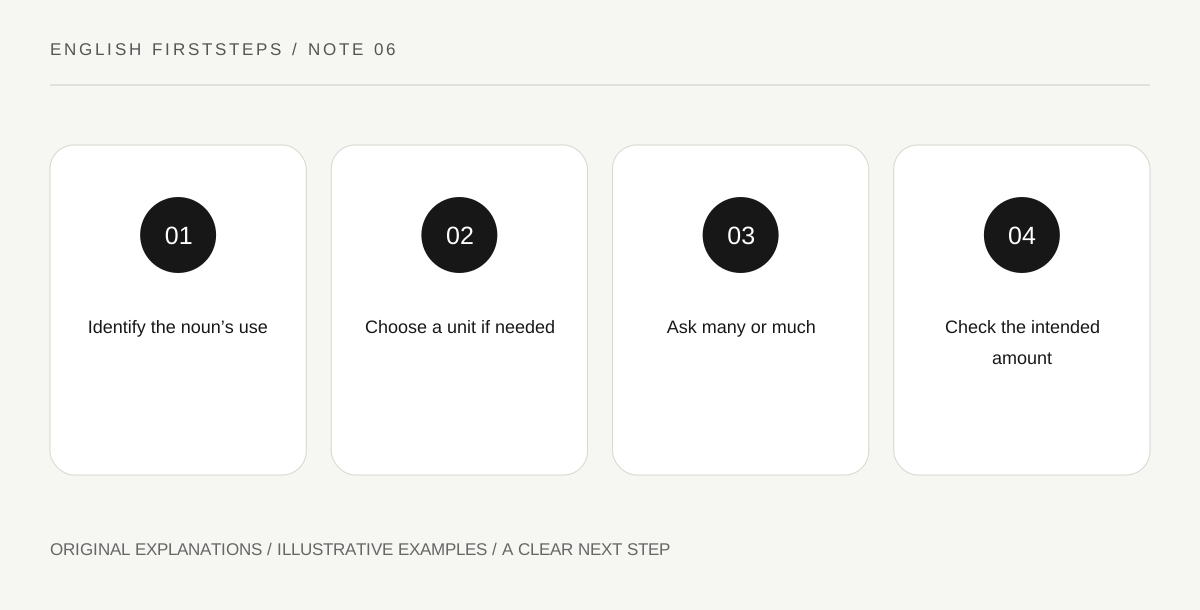
Core sentences3 min read
English countability describes how a noun is used, not whether a real object could ever be counted. Apples take plural forms easily; rice usually needs a quantity or container expression. Learn the noun’s pattern with a useful phrase, then choose how many or how much accordingly.
Read the guide ↗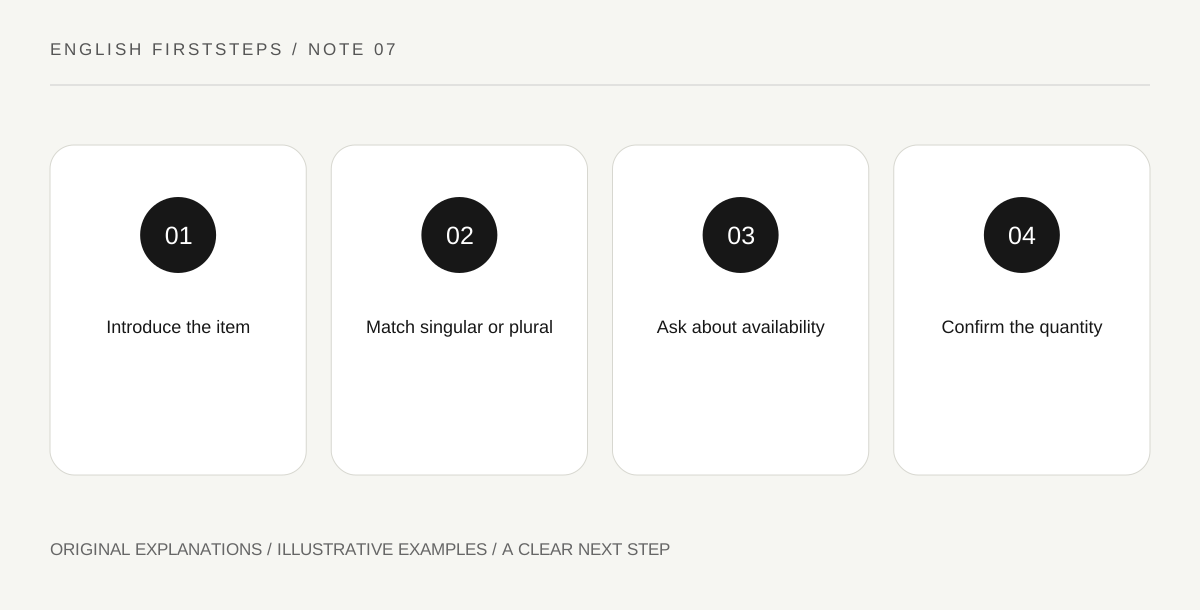
Core sentences3 min read
There is and there are introduce something that exists in a place. They are useful for describing a room, checking facilities or asking what is available. Keep them separate from a sentence that tells you where an already identified object is located.
Read the guide ↗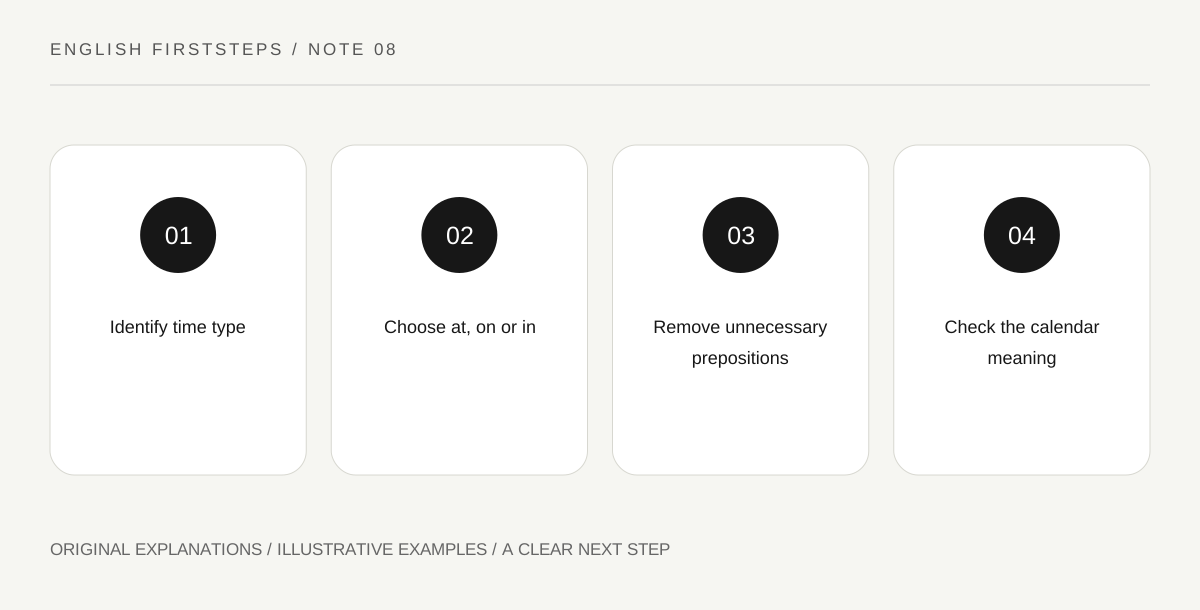
Core sentences3 min read
Time prepositions become easier when you learn a few meaningful groups. At often marks clock times, on marks days and dates, and in marks months or broader periods. Use them to build an appointment message, while keeping the actual day and hour unambiguous.
Read the guide ↗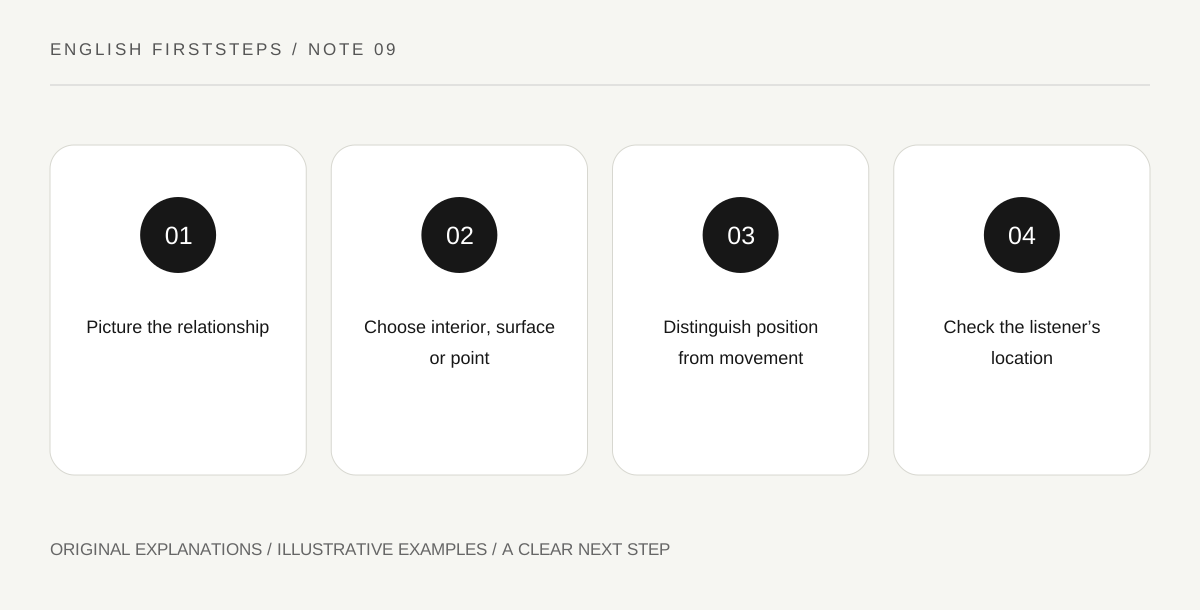
Core sentences3 min read
Place prepositions express how you view a location: as an enclosed space, a surface or a point in an activity. Begin with visible objects and a simple map. The same place can take different prepositions when the intended meaning changes, so context matters more than a single translation.
Read the guide ↗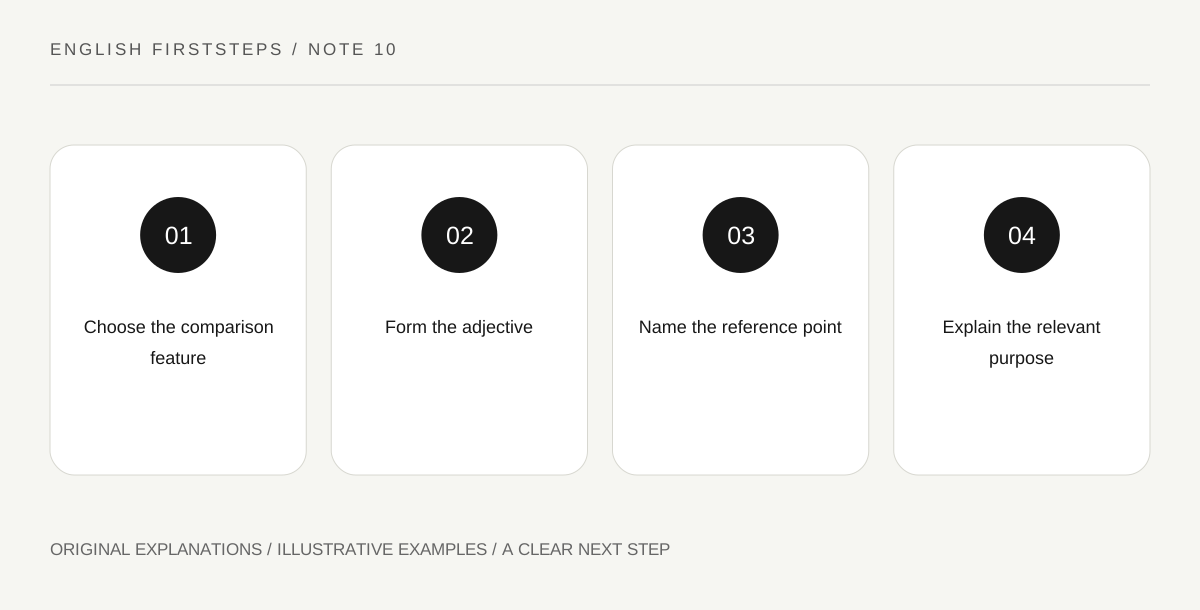
Core sentences3 min read
Comparatives help you explain why one option suits a purpose better than another. Learn the adjective form, name what you are comparing, and support the comparison with a concrete observation. A grammatical sentence should not turn a personal preference into an unsupported universal claim.
Read the guide ↗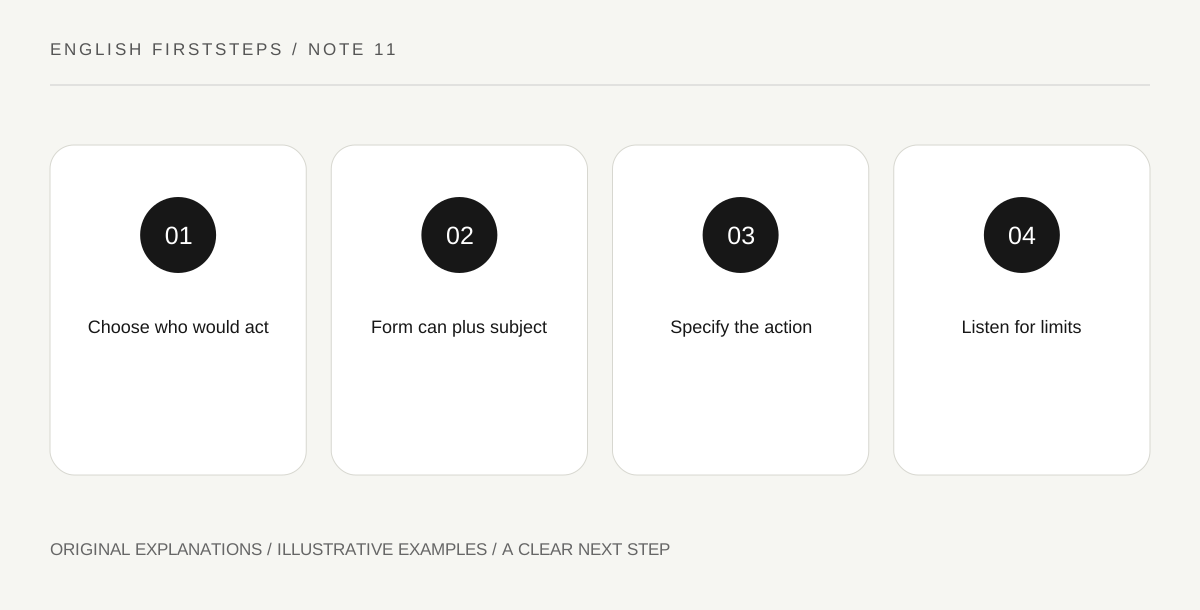
Everyday speaking3 min read
Can forms useful beginner requests without a complicated verb change. Learn the difference between asking someone to act and asking permission for yourself. Then make the request specific enough to answer, and listen for conditions rather than treating every polite reply as a simple yes.
Read the guide ↗
Everyday speaking3 min read
Saying a drink name is only one part of ordering. The server may ask about size, temperature or whether you are staying. Learn a compact opening, recognize common follow-ups and confirm your order before treating the total as the end of the conversation.
Read the guide ↗
Everyday speaking3 min read
Clothing shopping gives beginners a practical reason to use this, these, size words and comparisons. Keep the item clear, distinguish a request from a purchase decision and describe what does not fit. Use the language to inspect the garment rather than rely on its label alone.
Read the guide ↗
Everyday speaking3 min read
Direction words become useful when they connect to a visible place and a sequence. Learn a polite question, a small set of movement instructions and a way to confirm the turn. A familiar-sounding route still needs to lead to the exact destination you intended.
Read the guide ↗
Everyday speaking3 min read
Names and digit strings demand precise listening even when the surrounding conversation is simple. Learn to ask for spelling, distinguish similar numbers and read a sequence back. Use fictional contact details for practice so accuracy work does not require publishing or sharing private information.
Read the guide ↗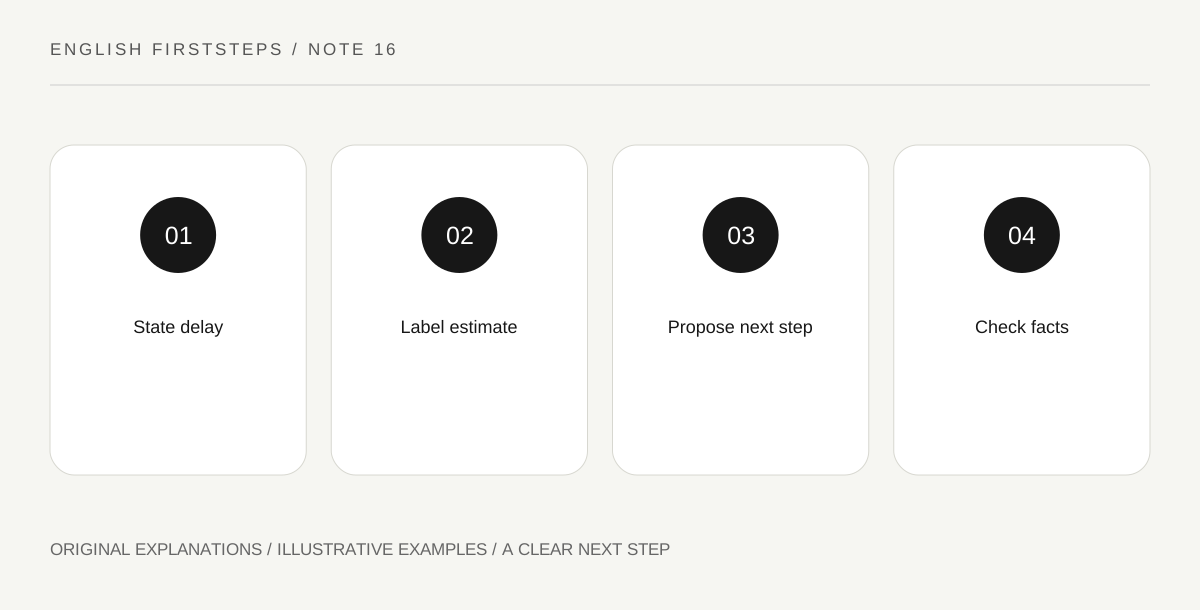
Useful writing3 min read
A useful delay message tells the other person what changed and what they can expect next. Keep the wording simple, distinguish an estimated arrival from a guaranteed one and say whether the meeting plan needs to change. Long explanations can hide the information the reader needs.
Read the guide ↗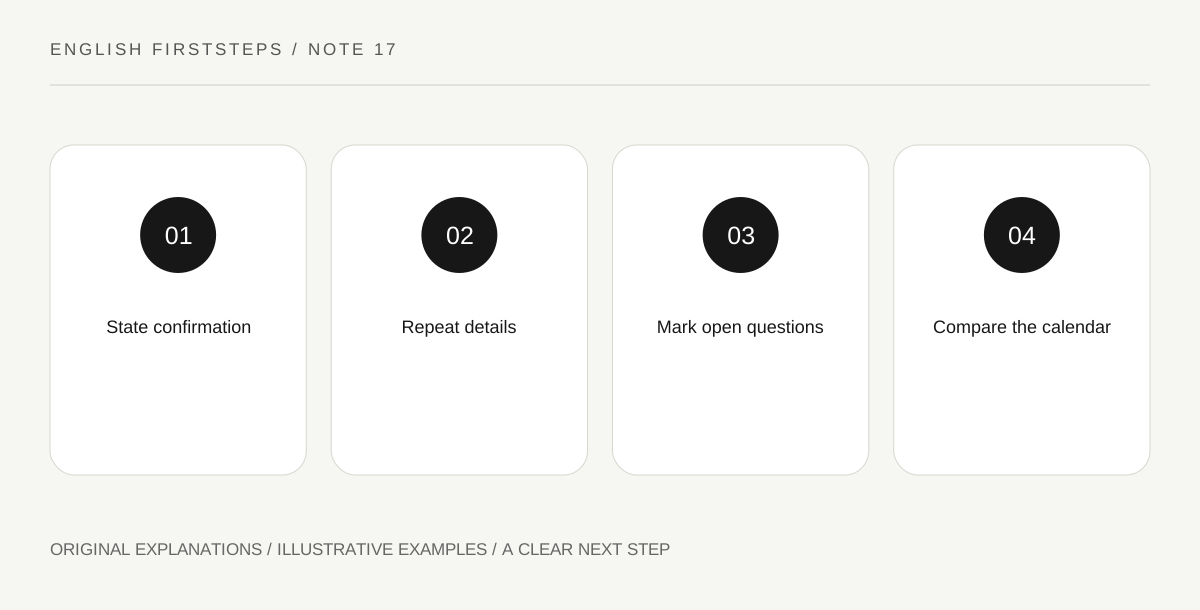
Useful writing3 min read
An appointment email should let the reader identify the meeting and check its details quickly. Use a simple subject, repeat the agreed day and time, and state the location or connection method. Confirmation differs from proposing a new appointment, so make the purpose explicit.
Read the guide ↗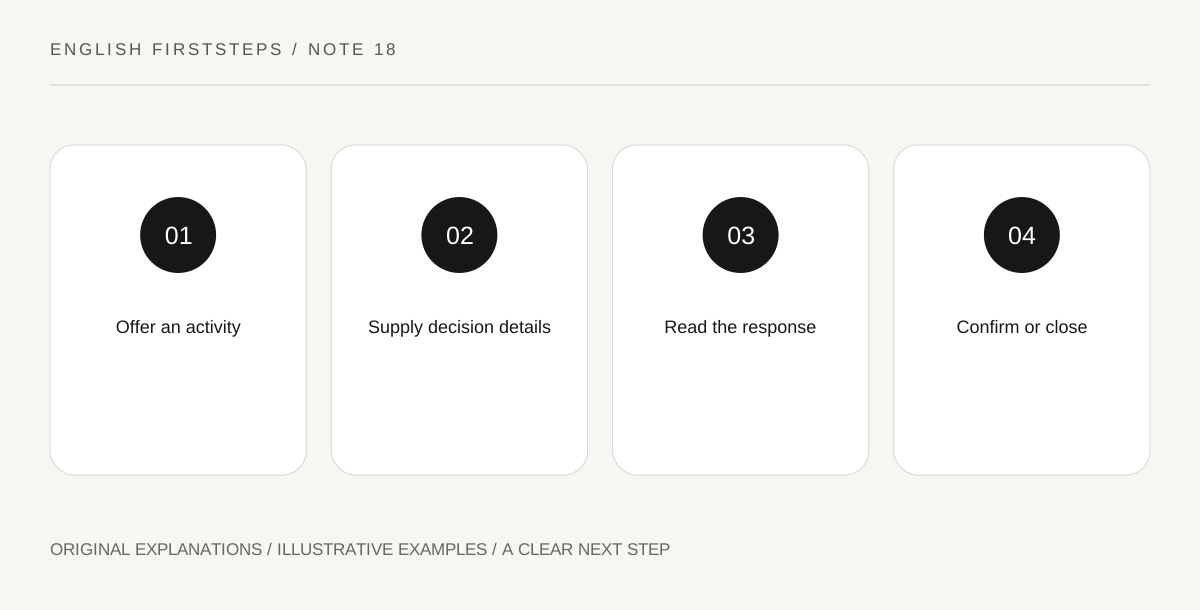
Useful writing3 min read
An invitation needs an activity and enough practical information for the other person to decide. Friendly wording leaves room for no. Learn a simple invitation, a clear acceptance and a brief decline, then negotiate a missing detail without treating an interested reply as a settled plan.
Read the guide ↗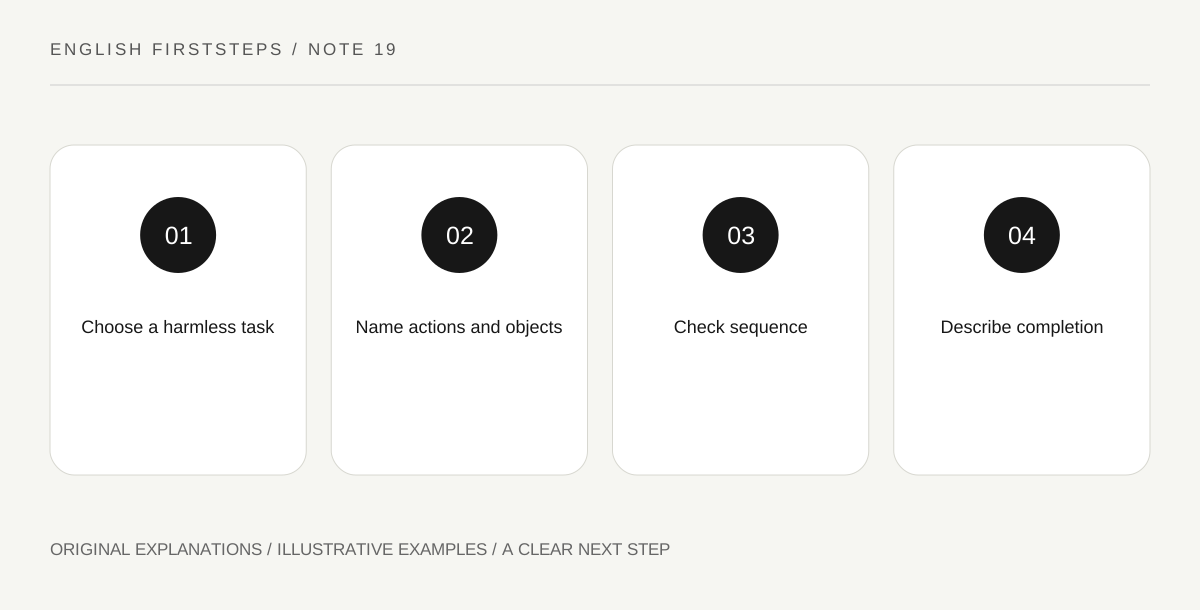
Useful writing3 min read
Simple instructions require clear actions, a useful order and an observable finish. Beginner English can do this without complex sentences. Choose a harmless everyday task, name the objects, and test whether another person can complete it using only the words you wrote.
Read the guide ↗
Listening practice3 min read
A short recording can teach more than a long clip you barely understand. Set one purpose, compare your answer with the text and reuse a phrase in a new exchange. Keep recognition, reading support and independent recall as separate things you can actually observe.
Read the guide ↗